As India prepares for the Union Budget 2025, two critical economic indicators—GDP growth and the fiscal deficit—dominate the discourse. India has been one of the fastest-growing major economies, but global uncertainties, domestic constraints, and inflationary pressures have raised concerns about sustaining this momentum. Simultaneously, balancing fiscal discipline with the need for public spending has emerged as a key policy challenge.
This article analyzes recent trends in GDP growth and fiscal deficit, evaluates their implications, and discusses potential measures in the upcoming budget to maintain growth while ensuring fiscal prudence.
India’s GDP Growth: Present Trends and Challenges

Recent Performance
India’s GDP grew by 8.2% in FY 2023-24, maintaining its status as the fastest-growing major economy. However, growth has started to moderate, with projections for FY 2024-25 hovering around 6.0-6.5%. The slowdown is attributed to:
- Global Headwinds: A weaker global economy, geopolitical tensions, and tightening monetary policies worldwide have dampened exports and investment flows.
- Domestic Challenges: Persistent inflation, weak rural demand, and subdued private investment have restricted growth potential.
- Sectoral Variations: While services have shown resilience, manufacturing and agriculture have lagged, pulling down overall growth.
Key Trends
- Services Sector as Growth Driver: Contributing over 55% to GDP, sectors like IT, banking, and telecommunications continue to support growth.
- Industrial Slowdown: Growth in the industrial sector has remained sluggish, with the Index of Industrial Production (IIP) expanding by only 3.5% in Q2 FY 2024-25.
- Agricultural Vulnerability: Growth in agriculture slowed to 2.8% due to erratic monsoons and structural inefficiencies.
Growth Projections Post-Budget
- Positive Outlook: The government’s focus on infrastructure, digitalization, and green energy is expected to support growth.
- Key Concerns: A slowdown in global demand, tight credit conditions, and inflation could restrict growth to 6.0-6.5% in FY 2025-26.
Fiscal Deficit: Current Status and Constraints
Present Trends
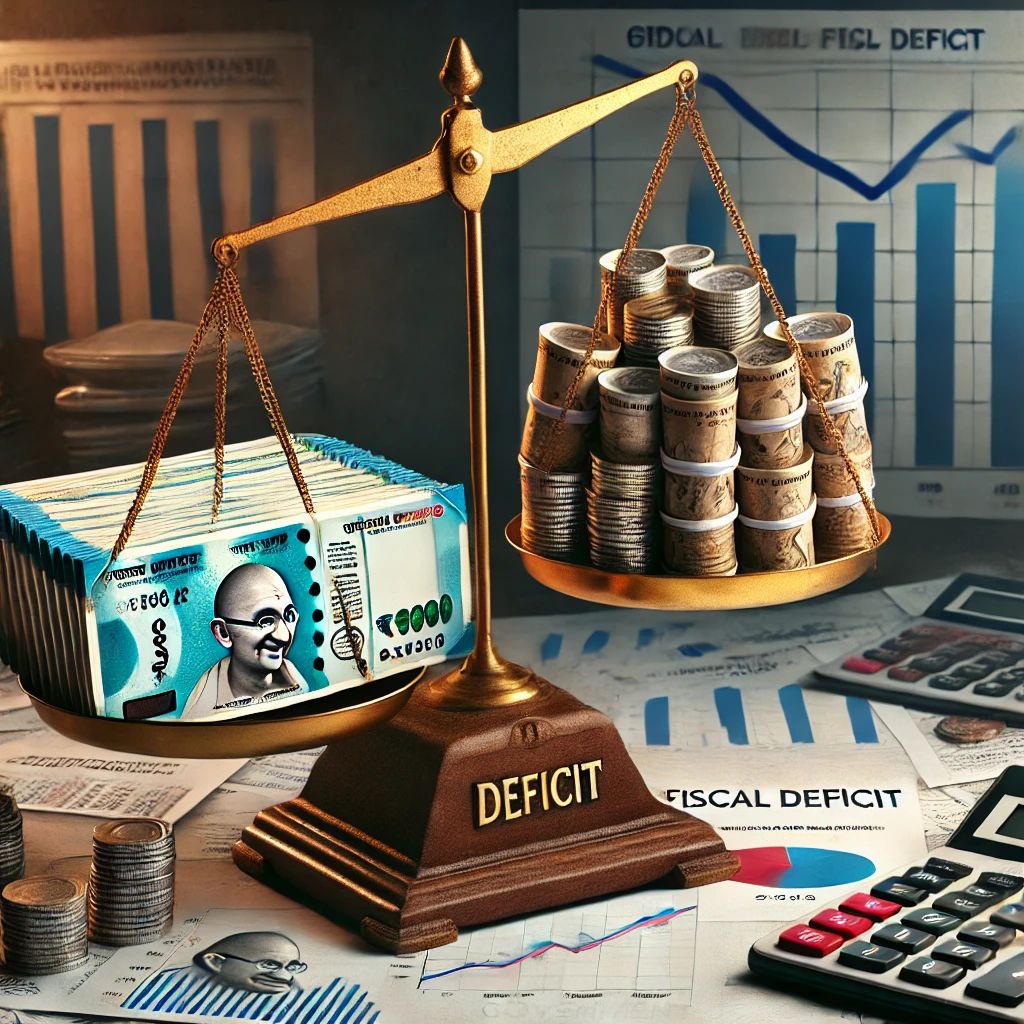
The fiscal deficit, the gap between government expenditure and revenue, stood at 5.6% of GDP in FY 2023-24. The government has set a target to reduce it to 4.9% in FY 2024-25.
Key Challenges
- Rising Subsidy Burden: Food, fertilizer, and fuel subsidies remain high, pressuring government spending.
- Debt Levels: India’s general government debt-to-GDP ratio hovers around 81%, higher than the emerging market average of 65%, posing sustainability concerns.
- Revenue Constraints: While GST revenues have grown by 12%, the tax base remains narrow, and tax compliance challenges persist.
- High Capital Expenditure Needs: To support infrastructure and job creation, the government must continue spending, making fiscal consolidation difficult.
Fiscal Targets Post-Budget
The Union Budget 2025 is expected to adopt a balanced approach—maintaining fiscal discipline while increasing productive spending to stimulate growth. A deficit target of 5.6-5.8% of GDP could be realistic if revenue collection improves and expenditure rationalization measures are implemented.
Budget 2025: Possible Policy Steps to Boost GDP Growth and Manage Fiscal Deficit
1. Infrastructure Investments for Growth
- Capital Expenditure Push: Increase allocations for roads, railways, ports, and urban infrastructure to boost demand and attract private investments.
- Public-Private Partnerships (PPPs): Encourage PPP models to reduce fiscal burdens while enhancing infrastructure spending.
- Green Infrastructure: Invest in renewable energy projects, electric vehicle infrastructure, and climate-resilient urban planning to drive long-term growth.
2. Revitalizing Manufacturing and MSMEs
- Production-Linked Incentives (PLI): Extend PLI schemes to more sectors like green hydrogen, medical devices, and precision engineering to spur industrial growth.
- Credit Support for MSMEs: Increase access to affordable credit and reduce compliance burdens for small businesses to scale operations and generate jobs.
- Technology Adoption: Promote Industry 4.0 technologies to make Indian manufacturing globally competitive.
3. Stimulating Private Consumption
- Tax Reforms for Individuals: Introduce higher exemptions under personal income tax slabs to boost disposable incomes.
- Affordable Housing Incentives: Provide interest subsidies for home loans to revive real estate demand and related sectors.
- Rural Demand Push: Expand rural infrastructure and employment programs like MGNREGA to increase rural incomes and consumption.
4. Export Growth and Trade Competitiveness
- Market Diversification: Negotiate new Free Trade Agreements (FTAs) and explore partnerships in Africa and Latin America.
- Logistics Efficiency: Invest in ports, supply chains, and digital tracking systems to reduce export costs and time.
- Incentivizing Exports: Extend export credit guarantees and reduce tariffs on raw materials to make Indian exports competitive.
5. Revenue Mobilization for Fiscal Discipline
- Tax Base Expansion: Strengthen GST compliance using AI-based monitoring and data analytics to detect evasion.
- Non-Tax Revenues: Monetize underutilized public assets through leasing models and land development projects.
- Green Bonds: Issue bonds to raise funds for sustainable energy and infrastructure projects.
- Disinvestment Targets: Accelerate strategic sales of public-sector enterprises to raise capital and reduce government liabilities.
6. Rationalizing Subsidies and Improving Targeting
- Direct Benefit Transfers (DBTs): Improve targeting of subsidies using Aadhaar to eliminate leakages in food and fertilizer distribution.
- Energy Subsidy Reform: Gradually shift subsidies from fossil fuels to renewable energy incentives to promote sustainability.
The Outlook Post-Budget 2025
GDP Growth Expectations:
As the budget is expected to emphasize infrastructure development, private-sector incentives, and rural reforms, this could help sustain growth at 6.5-7.0% for FY 2025-26. However, global uncertainties and inflation remain risks that could dampen growth momentum.
Fiscal Deficit Management:
While the government is expected to continue its fiscal consolidation path, the deficit is likely to hover around 5.6-5.8%, reflecting increased capital spending. Improvements in tax compliance and disinvestment proceeds could help keep the deficit in check without compromising growth.
Conclusion: Balancing Growth and Stability
The Union Budget 2025 is expected to walk a tightrope between sustaining growth and maintaining fiscal discipline. While GDP growth will be supported by infrastructure investments, export promotion, and private-sector incentives, fiscal deficit management will require revenue expansion and subsidy rationalization.
With the right mix of growth-oriented policies and prudent fiscal strategies, India can maintain its position as a global economic powerhouse while addressing long-term structural challenges. The budget must aim to create a virtuous cycle where increased spending stimulates growth, generates employment, and boosts revenues, ultimately leading to fiscal sustainability.
 Indian Political Debate