As Bihar prepares for its 2025 Legislative Assembly elections, the political narrative is shaped by a confluence of traditional challenges and new aspirations. This election is set to be a decisive battle among established political players and emerging voices, driven by a complex interplay of issues including unemployment, caste dynamics, governance, women and youth engagement, infrastructure needs, and law and order concerns. Additionally, topics like migration, climate challenges, and public health are becoming more prominent in voters’ minds.
This article delves into the multifaceted concerns shaping Bihar’s electoral discourse, shedding light on the state’s pressing challenges and the strategies political parties are adopting to address them.
—
Core Issues Dominating the Bihar Electorate
1. Unemployment and Government jobs
Unemployment is the dominant issue in Bihar, exacerbated by the state’s lack of industrial development. Bihar’s youth continues to migrate to other states in search of employment, often taking up low-paying jobs in sectors like construction and domestic services. Political promises to boost employment opportunities through industrialization and skill development have been recurrent themes, yet the electorate is increasingly impatient for tangible results.
– Government Jobs as Aspirations:A significant portion of Bihar’s workforce sees government jobs as a path to stability and dignity. Delays in recruitment processes and allegations of irregularities in exams have led to public outcry. Political parties are proposing measures to streamline recruitment and increase vacancies in public sector jobs, especially in education and health services.
-Focus on Local Industries:Some parties have promised to promote agro-based industries, dairy cooperatives, and textile units, which align with Bihar’s strengths. Whether these promises translate into policy initiatives remains to be seen.
Unemployment continues to be the most pressing issue for Bihar’s electorate. Despite Bihar’s rich human resource potential, the lack of industries and economic diversification has perpetuated dependence on agriculture and out-migration. A significant portion of Bihar’s youth views government jobs as the ultimate goal due to job security, stable income, and societal respect.
Government job exams like the Bihar Public Service Commission (BPSC) and other recruitment processes have witnessed massive participation, often marred by delays and inefficiencies. Political parties are making bold promises to prioritize government job recruitment, expedite exam processes, and increase vacancies across sectors like education, healthcare, and administration.
Tejashwi Yadav of the Rashtriya Janata Dal (RJD) has already promised to address the unemployment crisis with job creation schemes and enhanced recruitment in public sectors. Similarly, the BJP-JD(U) alliance is likely to focus on its record in governance and highlight plans to expand employment opportunities in various departments.
—
2. Law and Order
While Bihar has witnessed improvements in law and order under successive governments, issues like land disputes, organized crime, and rising cybercrimes continue to concern voters.
– Achievements and Gaps: Nitish Kumar’s tenure is credited with improving communal harmony and curbing violent crimes, but opposition parties argue that corruption and bureaucratic inefficiencies persist in the police force. Public perception of safety, particularly for women, remains a contentious topic.
– Election Narratives: Both the ruling NDA and the opposition Mahagathbandhan are likely to campaign on their respective law and order records, with promises of stricter policing and judicial reforms.
Bihar’s electorate remains deeply concerned about the law and order situation. While some progress has been made over the years in reducing crime rates, perceptions of insecurity persist. Issues like land disputes, corruption in police administration, and a rise in cybercrime have added to the electorate’s worries.
Nitish Kumar’s tenure has been marked by efforts to improve law and order through targeted interventions, including increased police recruitment and modernizing policing techniques. However, opposition parties argue that crime continues to plague certain regions, undermining the state’s growth potential.
The BJP-JD(U) alliance is likely to campaign on its achievements in maintaining communal harmony and implementing stricter measures against organized crime. On the other hand, the Mahagathbandhan is expected to highlight instances of lawlessness and demand greater accountability.
—
3. Education and Healthcare
The state’s education and healthcare systems remain underdeveloped despite policy interventions.
– Education: While schemes like the “Cycle Yojana” have improved school enrollment for girls, challenges such as high dropout rates, lack of trained teachers, and inadequate infrastructure persist. Political parties are proposing investments in digital classrooms and vocational training to address these gaps.
– Healthcare: The COVID-19 pandemic highlighted the fragility of Bihar’s healthcare system. Rural areas suffer from a lack of primary healthcare centers and specialized facilities. Political manifestos are focusing on expanding healthcare infrastructure, increasing medical staff recruitment, and offering affordable healthcare through insurance schemes.
—
4. Agriculture and Rural Economy
With over 70% of Bihar’s population engaged in agriculture, the rural economy remains a focal point. Farmers face issues like fragmented land holdings, erratic monsoons, and poor access to credit.
– MSP and Subsidies:Farmers are demanding better implementation of Minimum Support Prices (MSP) and subsidies for fertilizers and seeds. Additionally, there is growing interest in promoting organic farming and diversifying crop patterns to improve incomes.
– Irrigation:While the state has made strides in expanding irrigation facilities, many regions still rely heavily on monsoons, leaving them vulnerable to droughts and floods.
—
5. Infrastructure Development
Infrastructure development is a critical area where Bihar lags behind. Roads, railways, electricity, and digital connectivity are often inadequate, particularly in rural areas.
– Roads and Transportation:While improvements have been made under Nitish Kumar’s administration, remote regions still suffer from poor connectivity. Political parties are proposing comprehensive road and bridge projects to enhance accessibility.
– Urban Development:With growing migration to cities like Patna, Gaya, and Muzaffarpur, urban infrastructure is under stress. Plans for smart cities and improved public transport are being pitched as solutions.
—
6. Climate Change and Disaster Management
Bihar is one of India’s most flood-prone states, with recurring disasters affecting millions annually. Climate change has further exacerbated these challenges.
– Flood and Drought Management: Political parties are promising better flood management systems, including embankment repairs, improved drainage, and early warning systems.
– Renewable Energy:There is also a push for renewable energy projects, particularly solar power, to reduce dependence on conventional energy sources and create green jobs.
—
7. Migration and Urbanization
Bihar’s high rate of migration for employment is a persistent issue. Political parties are addressing this by proposing job creation programs and urbanization policies to retain talent within the state.
– Skill Development Initiatives: Programs focusing on vocational training and entrepreneurship are being highlighted as solutions to counter migration and encourage self-employment.
—
Caste Dynamics: The Bedrock of Bihar Politics
1. Traditional Alignments
Caste equations remain a decisive factor in Bihar’s elections. The BJP-JD(U) alliance relies on support from upper castes (Brahmins, Rajputs, Bhumihars, Kayasthas) and Nitish Kumar’s Kurmi base. The Mahagathbandhan, led by the RJD, counts on the Yadav-Muslim (MY) combination and a coalition of Dalit and backward castes.
2. Emerging Trends
Smaller castes like the Paswans (Dalits) and Kushwahas (OBCs) are asserting their political relevance. These groups are demanding greater representation and targeted welfare schemes.
3. Caste-Based Reservation
The recent caste census conducted during the Nitish Kumar led Mahagathbandhan government and the proposal to increase reservations for OBCs and EBCs have polarized opinions. While the Mahagathbandhan champions this as a step toward social justice, the BJP is cautious in balancing its upper-caste vote bank with the aspirations of backward castes.
—
Emerging Factors: Women and Youth as Key Voters
1. The Mahila (M) Factor
1. The Growing Influence of Women Voters
In recent elections, women have emerged as a critical voter bloc in Bihar, with higher voter turnout rates than men. Schemes like the “Cycle Yojana” for girl students and 50% reservation for women in Panchayati Raj institutions have cemented Nitish Kumar’s popularity among women.
2. Focus on Women’s Welfare
The 2025 elections are expected to see intensified competition for women’s votes. Political parties are rolling out promises of financial independence through self-help groups, safety measures, and targeted welfare schemes. The RJD has promised to expand pension schemes for widows and elderly women, while the BJP-JD(U) alliance is likely to focus on empowering women through skill development programs.
3. Decisive Role in Rural Areas
Women voters, particularly in rural areas, have become decision-makers in households, influencing electoral outcomes. Their focus on tangible benefits like LPG subsidies, food security, and education makes them a crucial demographic for all parties
4. Growing Price rise has been a important factor. This has a significant impact on the women who are running the daily family expenses.
—
2. The Youth(Y) Factor
1. Aspirations and Frustrations
With over 60% of Bihar’s population under 35, the youth are a formidable force in shaping electoral outcomes. However, the lack of adequate employment opportunities, skill development programs, and entrepreneurial support has left many disillusioned. The aspiration for government jobs is a significant driver of youth participation in the political process.
2. Skill Development and Employment Initiatives
Recognizing the potential of this demographic, political parties are prioritizing promises of skill development initiatives, industrial growth, and startup support. The BJP-JD(U) alliance is expected to highlight schemes like the “Kushal Yuva Program,” while the RJD will push its vision of creating public sector jobs and improving recruitment processes.
3. Digital Outreach
Youth engagement has also influenced campaign strategies, with parties investing in social media outreach and digital platforms to connect with tech-savvy voters.
—
Regional Issues and Aspirations
1. Flood-Prone Areas
Regions like North Bihar, frequently affected by floods, demand better disaster management policies, embankment repairs, and compensation for affected farmers.
2. Maoist-Affected Regions
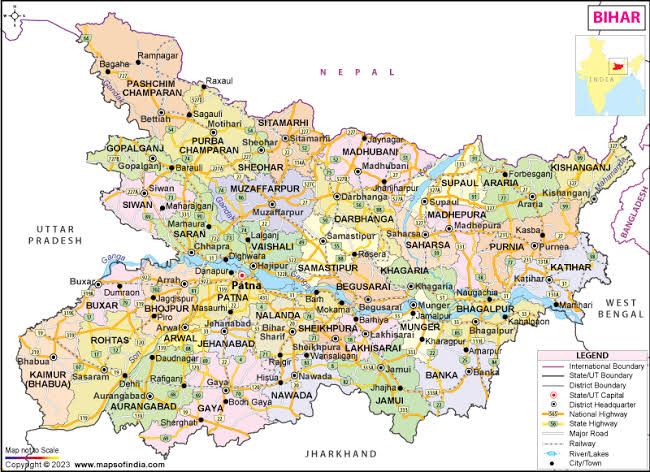
In areas like Gaya and Aurangabad, Maoist activities continue to disrupt normalcy. Voters here prioritize security and development initiatives to counter insurgency.
3. Urban Centers
Cities like Patna and Muzaffarpur are focusing on urban development, better infrastructure, and improved public services.
—
Challenges for Major Political Players
1. Nitish Kumar (NDA)
Nitish Kumar faces the challenge of overcoming anti-incumbency sentiments while balancing his alliance with the BJP. His governance record on law and order, infrastructure, and welfare will be key to his electoral prospects. Along with his focus on upper caste and EBC vote base specifically on the kurmis and dalits(Paswan), the focus of his alliance will be on the Mahila vote bank, the new M vote bank of the state.
2. Tejashwi Yadav (Mahagathbandhan)
Tejashwi Yadav seeks to position himself as the voice of Bihar’s youth and marginalized communities. His ability to expand beyond the traditional Yadav-Muslim base will be crucial specifically on other extremely backward communities and Dalits. More than that through his measures, he and his alliance will focus on the Youth(Y) vote base as well as on the Mahila( M) vote bank.
—
Conclusion
The 2025 Bihar Assembly elections are shaping up to be a contest of competing visions for the state’s future. While traditional factors like caste equations and law and order remain influential, emerging issues such as employment, climate resilience, women’s empowerment, and youth aspirations are reshaping the political landscape. The electorate’s growing demand for accountability, development, and inclusivity reflects a desire for tangible progress. As Bihar stands at this crossroads, the upcoming elections will not only decide its leadership but also chart a path for its socio-economic transformation.
 Indian Political Debate