As the Indian Finance Minister prepares to unveil the Union Budget 2025, the nation stands at a critical crossroads. The economy has shown resilience after the pandemic and global disruptions, but cracks in its foundation reveal deep-seated imbalances. These imbalances, largely stemming from mismatches in demand and supply, pose a unique challenge for policymakers.
India’s story is one of contrasts—rapid urbanization and technological innovation coexisting with agrarian distress and rural stagnation. It’s a country where high-growth industries thrive in cities, while nearly 42% of the workforce remains tied to agriculture, contributing only 17% to GDP. This dependence reflects a glaring demand-supply disconnect—a lack of alternative employment opportunities on the one hand, and an oversupply of low-productivity labor on the other.
As we move toward 2025, the challenge lies not just in growing the economy but in balancing the intricate dance between demand and supply to ensure sustainable and inclusive growth.
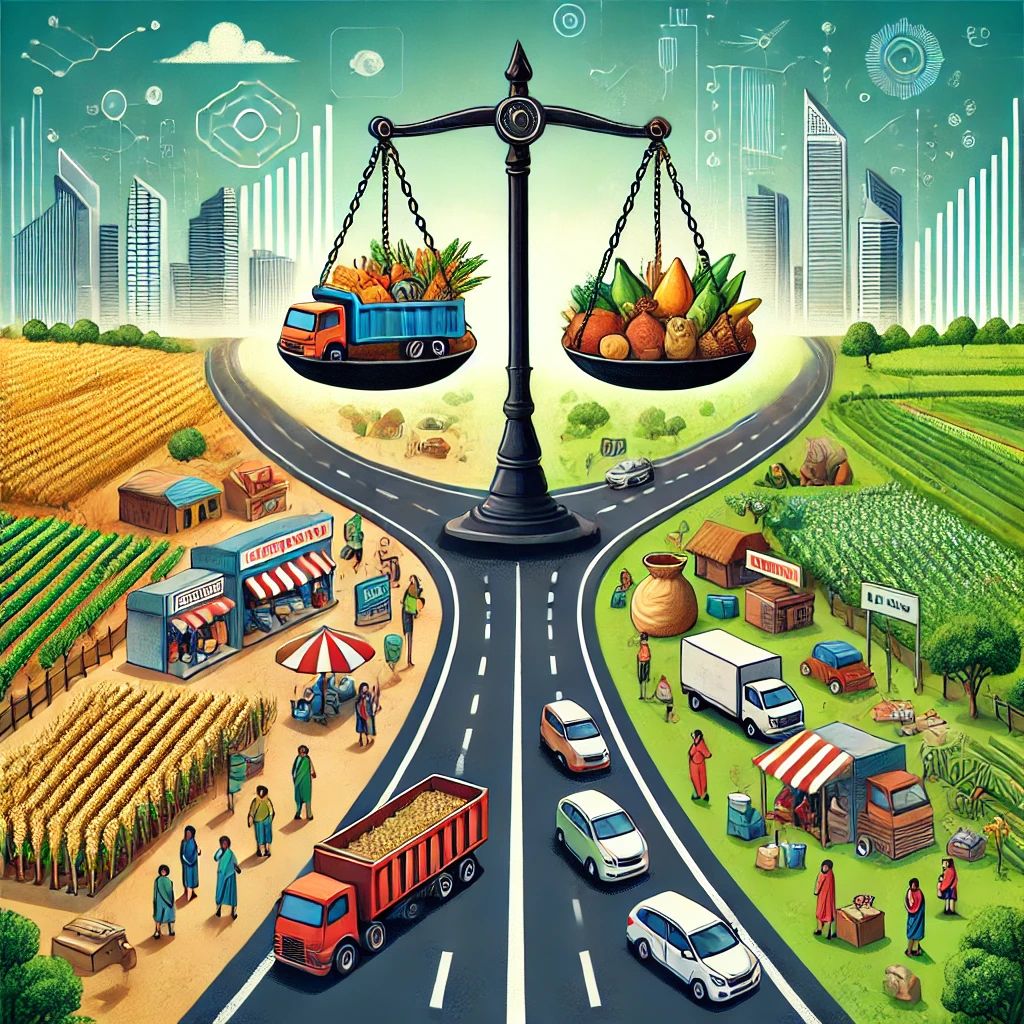
The Demand Side: Consumption, Investment, and Income
At the heart of the Indian economy is demand—what people spend, what businesses invest, and what the government allocates. However, cracks in India’s demand-side story have widened over the past year.
1. Rural Consumption Slowdown
In India’s villages, the effects of inflation—particularly food inflation, which surged to 10.87% in October 2024—are palpable. Rising costs of essentials have eroded disposable incomes, leading to lower consumption. Small-scale farmers, who depend heavily on rain-fed crops, face unreliable incomes, further suppressing rural demand.
2. Urban Discretionary Spending
Urban India, often seen as the engine of consumption, is struggling to return to pre-pandemic spending patterns. High inflation, coupled with underemployment and weak wage growth, has curbed discretionary spending on items like electronics, automobiles, and leisure.
3. Investment Bottlenecks
Private investment—historically a pillar of India’s growth—has remained sluggish. High borrowing costs, global uncertainty, and regulatory hurdles have dampened business sentiment. Even sectors like manufacturing, which were expected to drive post-pandemic recovery, face capacity underutilization and subdued demand.
4. Unemployment and Income Inequality
While the national unemployment rate is at 3.2%, it masks deeper structural issues. Urban female unemployment stands at 7.1%, and the informal sector, which employs the majority of the population, offers low wages and little security. This imbalance has created a wide income gap, leading to unequal demand growth across economic segments.
The Supply Side: Infrastructure, Productivity, and Innovation
While demand-side issues create challenges, supply-side constraints amplify them. The Indian economy struggles with inefficiencies that reduce productivity, increase costs, and prevent resources from flowing smoothly across sectors.
1. Over-Reliance on Agriculture for Employment
India’s dependence on agriculture is both a lifeline and a bottleneck. Agriculture employs nearly half the workforce but generates less than one-fifth of the GDP. Fragmented landholdings, outdated farming techniques, and lack of storage facilities create inefficiencies that drive farmers into debt while limiting output.
On the other hand, manufacturing and services—sectors that can absorb surplus labor—face supply-side bottlenecks. Skill shortages, poor infrastructure, and inconsistent policies have kept these sectors from expanding at the pace required to absorb rural migrants.
2. Infrastructure Gaps
India’s infrastructure—roads, ports, and logistics—continues to lag behind global standards, raising costs and slowing supply chains. Exporters face long clearance times, while manufacturers struggle with unreliable power supplies and high transport costs.
3. Education and Skills Shortages
India’s demographic dividend is a double-edged sword. While the working-age population is growing, a mismatch between skills and industry needs leaves many unemployed or underemployed. Emerging sectors like AI, renewable energy, and healthcare face labor shortages, while traditional sectors are overstaffed with low-productivity workers.
4. Climate and Energy Constraints
The energy transition to renewables is critical, yet slow. Rising energy demand in urban and industrial sectors risks outpacing supply, while rural areas still grapple with unreliable power. Climate-related disruptions, such as erratic monsoons and droughts, further strain both energy and agricultural resources.
Aligning Demand and Supply: The Way Forward
1. Boosting Rural Demand Through Productivity Gains
The Budget must focus on revitalizing agriculture by investing in irrigation, modern farming techniques, and cold storage facilities. Providing easy credit to farmers and strengthening the Minimum Support Price (MSP) mechanism can enhance incomes, spurring rural demand. Simultaneously, expanding rural employment through schemes like MGNREGA and promoting agri-tech startups can bridge the demand-supply gap.
2. Stimulating Urban Demand
To revive urban consumption, policymakers need to increase disposable incomes through tax relief measures and incentives for affordable housing. Expanding social security programs can provide safety nets for informal workers, reducing income volatility and boosting confidence to spend. Initiate an urban employment guarantee scheme in the lines of MGNREGA to ensure consistent work and income for semi skilled and unskilled workforce in urban areas.
3. Reforming Education and Skill Development
Addressing the supply-demand mismatch in skills requires modernizing vocational training and aligning curricula with industry needs. Budget 2025 should incentivize private-sector participation in skill-building initiatives, particularly in high-growth sectors like AI, robotics, and renewable energy.
4. Infrastructure Development for Supply Efficiency
Investments in ports, roads, and logistics can reduce costs and improve supply-side efficiency. Faster clearances, simplified customs procedures, and digital infrastructure can make India more competitive in global trade.
5. Green Growth and Energy Security
India’s transition to renewable energy must be accelerated through fiscal incentives for solar, wind, and green hydrogen projects. Investments in electric vehicle infrastructure and energy-efficient technologies can reduce dependence on fossil fuels while creating new jobs and industries.
6. Fiscal Discipline and Revenue Growth
Balancing fiscal prudence with growth requires expanding the tax base, improving compliance, and reducing tax evasion. Introducing green bonds and sovereign wealth funds can raise resources for climate-focused investments. Rationalizing subsidies while ensuring targeted delivery through Direct Benefit Transfers (DBTs) can reduce fiscal burdens without compromising welfare.
Conclusion: Bridging the Divide
India’s economic journey is defined by contrasts—growth and stagnation, abundance and scarcity, urban wealth and rural poverty. The Union Budget 2025 must address these divides by aligning demand and supply dynamics to create a sustainable growth model.
By focusing on increasing rural incomes, enhancing productivity, and expanding employment opportunities, the government can reduce over-reliance on agriculture and transition to a more balanced economy. Simultaneously, investments in infrastructure, education, and green energy can ensure long-term sustainability.
As India stands at the threshold of a new economic era, the Budget’s ability to bridge the gaps between demand and supply will determine not just its immediate recovery but its long-term resilience and prosperity.
 Indian Political Debate