Introduction
India’s economic story over the past decade is one of contrasts—growth and stagnation, rise and decline, transformation and inertia. The Monthly Per Capita Expenditure (MPCE) offers a compelling lens through which these shifts can be examined, capturing patterns of prosperity and deprivation.
A comparison of MPCE rankings between 2011-12 and 2023-24 reveals surprising reshuffles in both rural and urban landscapes. Some states have risen as leaders, others have slipped, and a few remain anchored at the bottom. As the nation inches closer to becoming a $5 trillion economy, these rankings carry lessons on governance, policy, and the uneven paths of development.
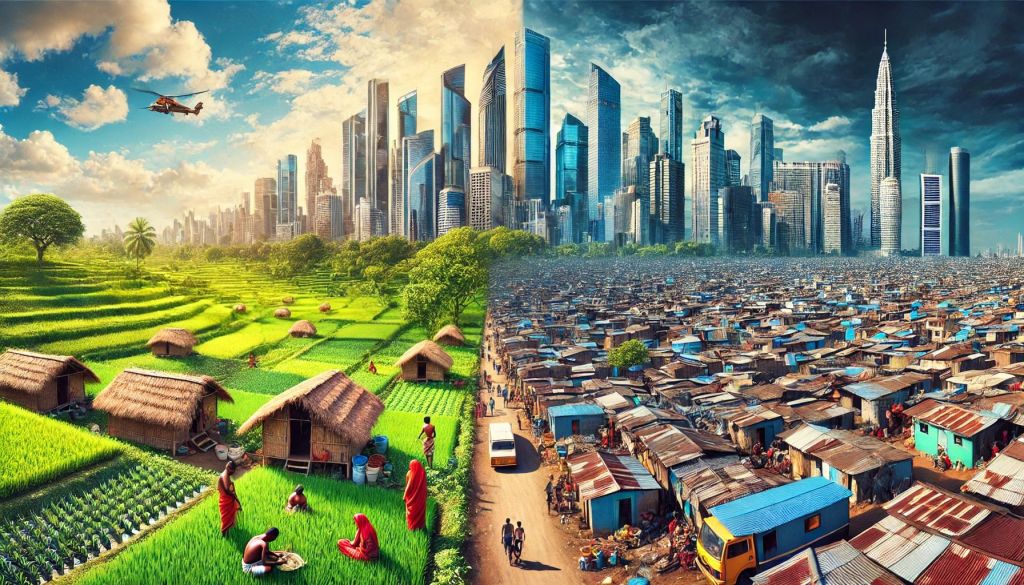
Rural Rankings: The Silent Revolution
Top 5 Rural States
- 2011-12: Kerala, Punjab, Haryana, Andhra Pradesh, Tamil Nadu.
- 2023-24: Kerala, Punjab, Haryana, Karnataka, Tamil Nadu.
Bottom 5 Rural States
- 2011-12: Jharkhand, Chhattisgarh, Bihar, Odisha, Madhya Pradesh.
- 2023-24: Chhattisgarh, Bihar, Jharkhand, Odisha, Madhya Pradesh.
A Tale of Two Stories—Winners and Strugglers
The rural rankings tell a story of quiet transformation. Kerala, Punjab, and Haryana have preserved their dominance, but Karnataka has been the standout performer. Rising from 7th to 4th, Karnataka’s rural prosperity has been fueled by irrigation reforms, rural electrification, and agri-tech interventions. Tamil Nadu, too, has held its ground, driven by rural industries and cooperative farming initiatives.
On the other hand, Andhra Pradesh’s slip from 4th to 6th raises questions about vulnerabilities in its agricultural economy and slower diversification into rural non-farm sectors. Maharashtra, a state with enormous influence, has also disappointed, dropping from 6th to 8th. This decline points to agrarian distress, climate challenges, and an uneven distribution of rural growth.
The Persistent Laggards
While the top states jostled for position, the bottom 5 states—Chhattisgarh, Bihar, Jharkhand, Odisha, and Madhya Pradesh—remained frozen in place. Bihar, despite a rise in MPCE values, continues to struggle with low literacy, high migration, and reliance on traditional farming. Chhattisgarh, anchored near the bottom, reflects governance gaps and failure to leverage its natural resource wealth.
The Large States in Focus
Uttar Pradesh and West Bengal, home to significant portions of India’s population, remain mired in mediocrity. Uttar Pradesh improved slightly, climbing from 15th to 13th, but its size and electoral weight make this slow progress concerning. West Bengal, with a rich cultural and economic history, has hovered around 11th place, failing to harness its rural potential despite strides in infrastructure. Maharashtra’s stagnation in the middle rankings highlights the fragility of rural development in otherwise industrialized states.
Policy Reflections
The rural data underscores the power of targeted policies. Karnataka’s rise shows the value of irrigation schemes and rural startups, while Maharashtra’s fall and Bihar’s inertia reflect gaps in agricultural modernization and job creation. Moving forward, the focus must be on replicating success stories in lagging states through agro-industrial linkages, financial inclusion, and skill-based employment programs.
Urban Rankings: Winners, Losers, and Those Left Behind
Top 5 Urban States
- 2011-12: Haryana, Kerala, Maharashtra, Karnataka, Punjab.
- 2023-24: Haryana, Tamil Nadu, Karnataka, Kerala, Telangana.
Bottom 5 Urban States
- 2011-12: Bihar, Odisha, Chhattisgarh, Jharkhand, Madhya Pradesh.
- 2023-24: Bihar, Chhattisgarh, Odisha, Jharkhand, Madhya Pradesh.
The New Urban Elite
Urban India has seen dramatic shifts. Tamil Nadu’s leap from 8th to 2nd exemplifies the power of planned urbanization, industrial zones, and IT hubs. Karnataka’s steady climb, driven by Bengaluru and secondary cities, reflects the role of innovation and global connectivity. Telangana, a new entrant in the top 5, has capitalized on Hyderabad’s IT boom and infrastructure development, setting an example for newly formed states.
However, Maharashtra’s drop from 3rd to 6th is an alarming signal. Despite Mumbai’s financial clout, the state’s urban fabric appears to be fraying under the pressure of rapid migration, congestion, and growing inequality. Gujarat’s absence from the top 5 also raises questions about its growth model, which, while industrially robust, may not have translated into broader urban prosperity.
The Struggle at the Bottom
The persistence of Bihar, Chhattisgarh, Odisha, Jharkhand, and Madhya Pradesh in the bottom 5 underscores the enduring challenges of weak infrastructure, lack of industrialization, and high unemployment. Bihar, in particular, remains the lowest-ranked state despite strides in education and roads, reflecting the slow pace of job creation and urban planning.
Chhattisgarh and Jharkhand, rich in resources, struggle to convert wealth into urban growth, plagued by governance issues and outmigration. Odisha, too, despite industrial potential, remains stuck, pointing to gaps in urban planning and connectivity.
The Large States in Focus
Uttar Pradesh and West Bengal occupy the middle ranks but tell stories of unfulfilled potential. Uttar Pradesh, with vast urban centers, has failed to break into the top 10, highlighting the need for focused urban reforms. West Bengal, despite Kolkata’s prominence, has failed to expand its urban reach and diversify economically. Maharashtra’s fall, from a top urban performer to outside the top 5, raises concerns about sustainability amid rapid urbanization.
Policy Imperatives
Urban winners like Tamil Nadu and Karnataka highlight the importance of smart infrastructure, industrial corridors, and IT hubs. For laggards, the focus must shift to urban renewal—affordable housing, job creation, and better connectivity. Maharashtra and Gujarat must work toward balancing growth with equity to reclaim their leadership positions.
Conclusion: The Rankings and the Road Ahead
The MPCE rankings over a decade reveal India’s fragmented growth story—pockets of prosperity coexist with persistent deprivation. Karnataka and Tamil Nadu’s rise highlights the rewards of targeted investments, while Maharashtra and Gujarat’s decline serves as a warning against complacency.
For populous states like Uttar Pradesh and West Bengal, the rankings underscore the need to translate demographic strength into economic opportunity. Meanwhile, Bihar and Chhattisgarh’s struggles demand urgent reforms to address structural poverty and migration pressures.
The road ahead must be paved with inclusive policies—those that build on India’s urban momentum while bridging the gaps in rural development. Economic prosperity, as these rankings show, is not just about growth but about governance, planning, and vision. The challenge is to ensure that no state, big or small, is left behind in India’s journey toward equitable development.
 Indian Political Debate