India’s employment scenario stands at a crossroads as the nation grapples with a complex mix of structural unemployment, skill mismatches, and declining labor force participation rates. Despite being one of the fastest-growing economies globally, India faces a significant challenge in translating economic growth into adequate job creation.
The Union Budget 2025 offers an opportunity to address these employment gaps by focusing on labor-intensive sectors, skill development, and incentivizing private investment to create sustainable job opportunities. This article examines the present challenges and outlines the steps the Finance Minister can take to tackle unemployment and boost job creation in the upcoming budget.
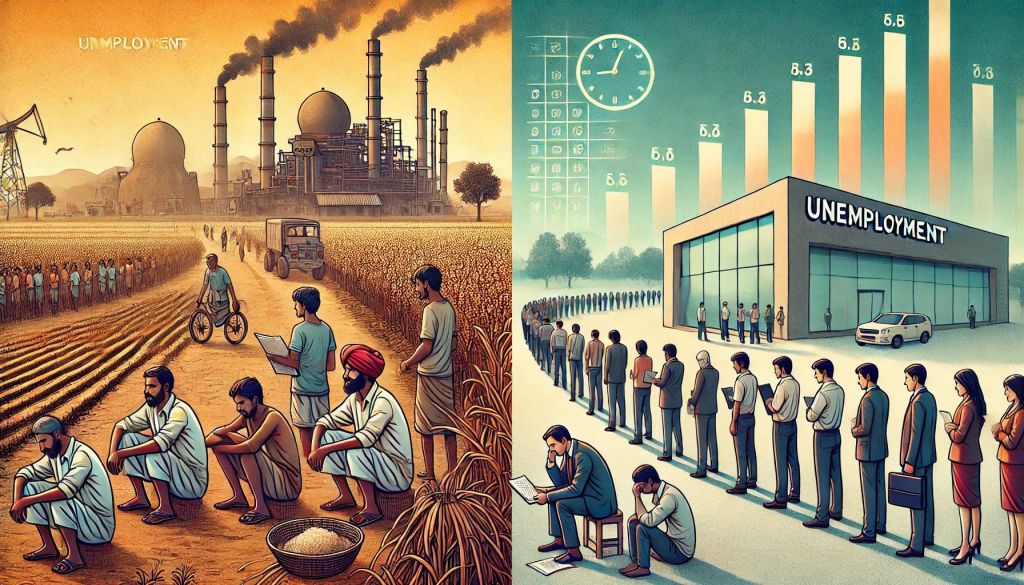
Current Employment Landscape: Key Challenges
1. High Unemployment and Underemployment
While India’s official unemployment rate stands at 3.2%, it masks deeper issues of underemployment and informal employment, especially in rural areas. Urban female unemployment remains disproportionately high at 7.1%, highlighting systemic barriers to workforce participation.
Challenges:
- Informal Workforce Dominance: Over 90% of India’s workforce operates in the informal sector, characterized by low wages, job insecurity, and lack of benefits.
- Youth Unemployment: Despite having one of the youngest populations in the world, India struggles to provide meaningful jobs to its youth, with 13.2% unemployment in the 20-24 age group.
- Skill Mismatches: A significant proportion of graduates lack employable skills, leading to a paradox where jobs remain vacant while unemployment persists.
2. Slow Growth of Labor-Intensive Industries
Sectors like textiles, construction, and MSMEs have traditionally employed a large portion of the workforce but have faced stagnation due to regulatory bottlenecks, rising input costs, and lack of technology adoption.
Challenges:
- Decline in Manufacturing Jobs: Manufacturing’s share of GDP remains at 15-16%, far below the desired 25% target and this sector absorbs around 11-12 percent of the workforce.
- MSME Sector Struggles: MSMEs, which account for 30% of GDP and over 110 million jobs, face financing issues and technological backwardness, limiting their ability to scale.
3. Agricultural Dependency and Rural Employment Deficit
Agriculture employs 42% of India’s workforce but contributes only 17% to GDP, highlighting a severe productivity gap. Lack of alternative employment opportunities forces rural labor to remain dependent on agriculture, resulting in seasonal unemployment and disguised underemployment.
Challenges:
- Rural-to-Urban Migration Pressure: Inadequate rural jobs push workers toward cities, exacerbating urban unemployment.
- Limited Non-Farm Opportunities: Weak linkages between agriculture and industry limit rural job diversification.
4. Female Labor Force Participation
India’s female labor force participation rate (FLFPR) stands at 24%, one of the lowest globally. Social norms, lack of childcare support, and safety concerns further reduce women’s participation in the workforce.
Challenges:
- Wage Disparities: Women earn 20-30% less than men for similar work.
- Employment Insecurity: Women are concentrated in informal jobs without social security or maternity benefits.
5. Emerging Sectoral Gaps and Automation Risks
While industries like AI, robotics, and renewable energy are growing, there is a shortage of skilled workers to meet demand. Simultaneously, automation in manufacturing threatens to displace low-skilled workers, exacerbating unemployment.
Challenges:
- Technology Disruption: Automation reduces demand for low-skilled labor, while the workforce is slow to adapt to emerging technologies.
- Regional Imbalances: Growth is concentrated in urban centers, leaving rural areas behind.
Way Forward: Policy Prescriptions for Budget 2025
1. Boosting Labor-Intensive Sectors
- MSME Revival Package: Increase credit guarantees, tax benefits, and low-interest loans to support MSME growth and create jobs.
- Manufacturing Incentives: Extend Production-Linked Incentives (PLI) to labor-intensive sectors like textiles, footwear, and electronics to spur employment.
- Construction and Infrastructure Jobs: Allocate higher funds to rural infrastructure and urban housing projects to generate short-term and long-term employment.
2. Strengthening Skill Development Programs
- National Skill Development Expansion: Align skill programs with emerging technologies (AI, data analytics, robotics) and traditional sectors like agriculture and handicrafts.
- Apprenticeship Incentives: Provide subsidies for companies hiring apprentices, encouraging on-the-job training for youth.
- Women-Specific Skill Programs: Introduce tailored training for women in digital marketing, healthcare, and renewable energy to increase female workforce participation.
3. Promoting Rural Employment and Diversification
- MNREGA Expansion: Increase budgetary allocations and link it to productive infrastructure development rather than just wage payments.
- Agri-Business Development: Promote food processing industries and agri-tech startups in rural areas to create non-farm employment opportunities.
- Cluster-Based Rural Industries: Develop rural manufacturing hubs supported by local entrepreneurship and cooperatives to reduce migration pressures.
4. Urban Employment Strategies
- Affordable Housing and Real Estate Jobs: Revive housing projects under PMAY to create construction jobs while addressing urban housing shortages.
- Startup and Innovation Grants: Provide funding for startups in technology and services to generate high-quality jobs.
- Urban Mobility Projects: Invest in metro rail, electric buses, and smart city infrastructure to create jobs in transport and urban planning.
- Urban Employment Guarantee Scheme: Like MGNREGA, an employee guarantee scheme focused on urban India mainly catering to apprenticeship in the services sector is an important need.
5. Women and Youth Empowerment
- Childcare and Safety Measures: Build crèches at workplaces and improve urban safety infrastructure to encourage women’s workforce participation.
- Entrepreneurship Support for Women: Provide grants and tax benefits to women-led startups and micro-enterprises.
- Youth Entrepreneurship Programs: Offer seed funding and mentorship programs for startups initiated by young entrepreneurs, particularly in rural areas.
6. Technology and Emerging Sectors
- Green Energy Jobs: Expand incentives for renewable energy, electric vehicles, and solar panel manufacturing to create sustainable jobs.
- AI and IT Training Centers: Establish AI and IT learning hubs in partnership with the private sector to train youth in future-ready skills.
- Public-Private Partnerships (PPPs): Encourage private sector involvement in skill development and employment generation through tax incentives.
Conclusion: Bridging the Employment Gap
India’s employment challenges are deeply rooted in structural inefficiencies, skill mismatches, and unequal labor force participation. The Union Budget 2025 presents an opportunity to address these issues through targeted interventions in MSMEs, infrastructure, rural employment, and emerging technologies.
By focusing on job creation in labor-intensive industries, promoting entrepreneurship, and investing in skills aligned with future demands, the budget can bridge the supply-demand gap in employment. With the right mix of policies, India can harness its demographic dividend and emerge as a global employment powerhouse, ensuring equitable growth and sustainable development.
 Indian Political Debate