Introduction
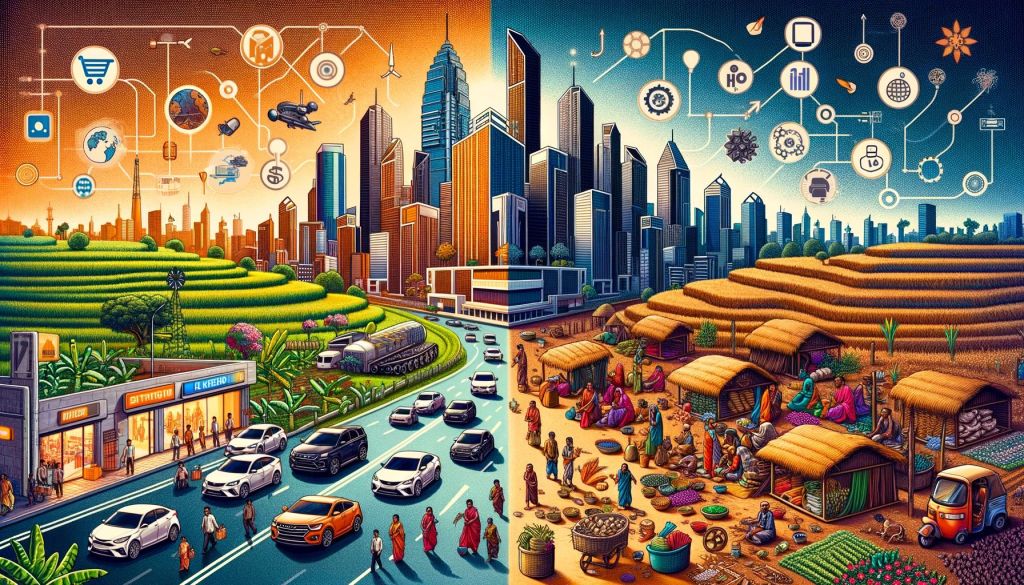
India’s economic journey over the past decade has been defined by rapid urbanization, rising incomes, and structural changes in its economy. Yet, beneath this transformation lies a complex story of aspirations, disparities, and shifting priorities. The Monthly Per Capita Expenditure (MPCE) data for 2011-12 and 2023-24 captures this evolution, offering insights into how Indian households—both rural and urban—allocate their spending.
While the share of food expenditure has declined, non-food spending has risen, reflecting diversification and modernization. However, the patterns also hint at persistent challenges, particularly in rural India, where agriculture continues to sustain a majority despite growing aspirations for modern living. This editorial explores these trends, focusing on the evolving consumption baskets and what they reveal about India’s socio-economic trajectory. The data source is attributed to HCES 2023-24, MoSPI, GoI (Government of India)
Rural Consumption Patterns: Aspirations Amid Dependence on Agriculture
Food: From Survival to Nutrition
In rural India, food expenditure has declined as a share of total spending, falling from 52.9% in 2011-12 to 47.04% in 2023-24. This shift suggests that rural households are gradually diversifying their expenses, but the persistence of nearly half the budget being spent on food reflects the continued centrality of agriculture and subsistence farming.
Staples like cereals have seen a sharp drop—from 10.69% to 4.97%—a trend that suggests growing reliance on subsidized grains through government schemes like the Public Distribution System (PDS). However, this decline does not necessarily indicate reduced consumption but rather an improvement in access through non-market channels.
Protein sources like eggs, fish, and meat have gained prominence, rising from 4.79% to 4.92%, as have milk and milk products, increasing slightly to 8.44%. These shifts reflect a dietary transition driven by rising awareness of nutrition and increased income stability. At the same time, spending on vegetables (around 6%) and fruits (both fresh and dry) highlights a slow but steady move toward diverse diets.
Yet, the growth of processed foods and beverages—from 7.90% to 9.62%—paints a dual narrative. On the one hand, it suggests improved access to markets and changing lifestyles. On the other, it raises questions about the infiltration of packaged foods in rural diets, potentially contributing to health concerns linked to modern consumption patterns.
The overall decline in the food share is a positive signal of economic diversification. However, the continued dependence of a large rural population—over 50%—on agriculture raises concerns about income volatility due to climate shocks, price fluctuations, and structural issues in the sector.
Non-Food: Rising Aspirations, Persistent Challenges
The share of non-food expenditure has grown from 47.1% to 52.96%, underscoring changing priorities and aspirations for modern living.
Expenditure on durable goods rose significantly from 4.85% to 6.48%, reflecting a desire for mobile phones, appliances, and better living conditions. Spending on conveyance more than doubled—from 4.20% to 7.59%—pointing to improved connectivity and mobility. Yet, these changes also highlight rural India’s growing dependence on transport for employment and education, which often involves migration to urban centers.
Healthcare spending remained steady, but education’s slight dip—from 3.49% to 3.24%—raises questions about access to quality schooling in rural areas.
Interestingly, spending on fuel and light fell from 7.98% to 6.11%, possibly due to government initiatives like Ujjwala Yojana, which improved access to LPG and electricity.
Despite these positive shifts, the data also highlights continued vulnerabilities. The rural economy remains deeply tied to agriculture, and while spending patterns suggest aspirations for modernity, the underlying dependence on subsistence farming leaves households exposed to risks. The challenge is to sustain this transition without leaving behind those who remain dependent on traditional livelihoods.
Urban Consumption Patterns: Modernity and Unequal Growth
Food: Convenience and Lifestyle Choices
Urban India’s share of food expenditure has fallen more sharply than rural areas, from 42.62% to 39.68%. This reflects a faster shift toward discretionary spending, influenced by urban lifestyles and access to varied markets.
Cereals dropped from 6.61% to 3.74%, reinforcing the role of government schemes and improved access to affordable staples. Meanwhile, spending on beverages and processed foods surged from 8.98% to 11.09%, highlighting growing urban reliance on convenience foods—a trend driven by busier lives but also raising concerns about health impacts.
Urban diets also emphasize protein, with spending on milk products holding steady at 7.19% and meat products at 3.57%. At the same time, fruits (dry and fresh) reflect a willingness to spend on premium nutrition, pointing to growing income disparities within urban populations.
Non-Food: Modernization at a Cost
Urban households spend more than 60% of their budgets on non-food items, signaling modern aspirations but also widening economic gaps.
Spending on housing has risen from 6.24% to 6.58%, driven by high rents and urban migration pressures. Durable goods and conveyance spending grew steadily, indicating demand for vehicles and home appliances. Yet, healthcare costs and education remained largely unchanged, raising concerns about affordability despite economic growth.
Urban India’s spending priorities point to an economy shaped by services, technology, and aspirations for upward mobility. However, the data also highlights the persistence of inequality—while some households can invest in comfort and convenience, others struggle with high rents and stagnant health expenditures.
The bottom 5 states—Bihar, Chhattisgarh, Odisha, Jharkhand, and Madhya Pradesh—remain stuck in low urban spending brackets, underscoring the urban-rural divide even within urban spaces. This raises critical questions about whether India’s urbanization is truly inclusive or widening existing disparities.
Conclusion: The Paradox of Progress
The MPCE data reflects India’s progress, but it also reveals enduring divides. In rural areas, spending patterns highlight aspirations for modern living, yet the continued dominance of agriculture underscores vulnerabilities. Urban areas, while embracing modernization, expose growing inequalities and the need for sustainable development.
For rural India, the path forward lies in reducing dependence on agriculture through diversification into agro-industries, skill development, and better market access. Urban India, meanwhile, must focus on affordable housing, education, and inclusive infrastructure to make growth equitable.
India’s consumption patterns tell a story not just of rising prosperity but also of the challenges of transition. Balancing growth with equity will be critical as the country moves toward its economic ambitions.
 Indian Political Debate