This analysis reviews India’s economic performance in 2024, focusing on sectoral contributions to GDP, employment distribution, and the varying productivity across key sectors. It touches upon the regional and sectoral differences that influence economic outcomes across the country.
1. Sectoral Growth and Employment scenario
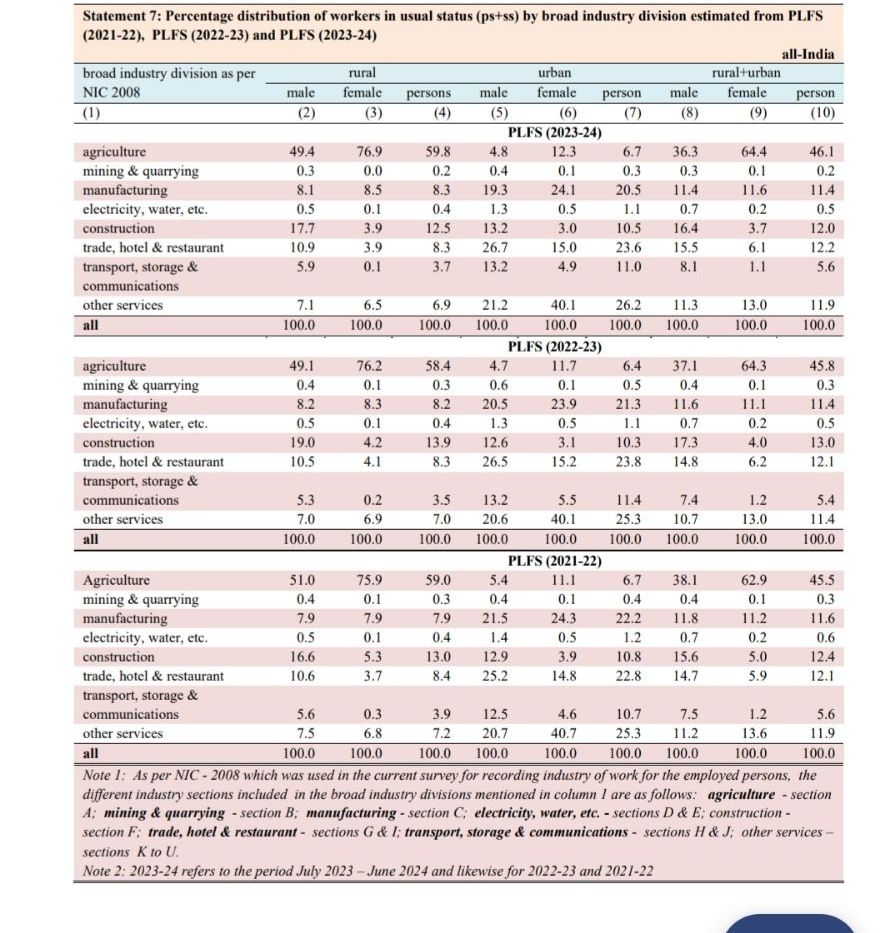
– Primary Sector (Agriculture): The primary sector grew by 2.7% in 2024-25, contributing 14.3% to GDP while employing 59.8% of the rural workforce. At an all India level this sector employs 46.3 percent of the population. Despite its critical role in rural employment, the sector’s low productivity limits income growth, highlighting the ongoing shift towards other sectors as drivers of economic progress.
Despite employing the majority of the rural workforce, agriculture’s share of GDP remains low, signaling the need for diversification and productivity improvements in rural economies.
– Secondary Sector (Manufacturing + construction): The manufacturing-led secondary sector, with 9.6% growth, contributed 26.6% to GDP but employed around 23% of the workforce. This sector’s higher productivity and wages are mostly concentrated in urban areas, reflecting its role in urban industrial expansion. Manufacturing only contributes to 8.3 percent of the total rural employment.
While manufacturing’s contribution to GDP is strong, its limited capacity to absorb labor, particularly in rural regions, points to the need for broader inclusion of the rural workforce in industrial growth.
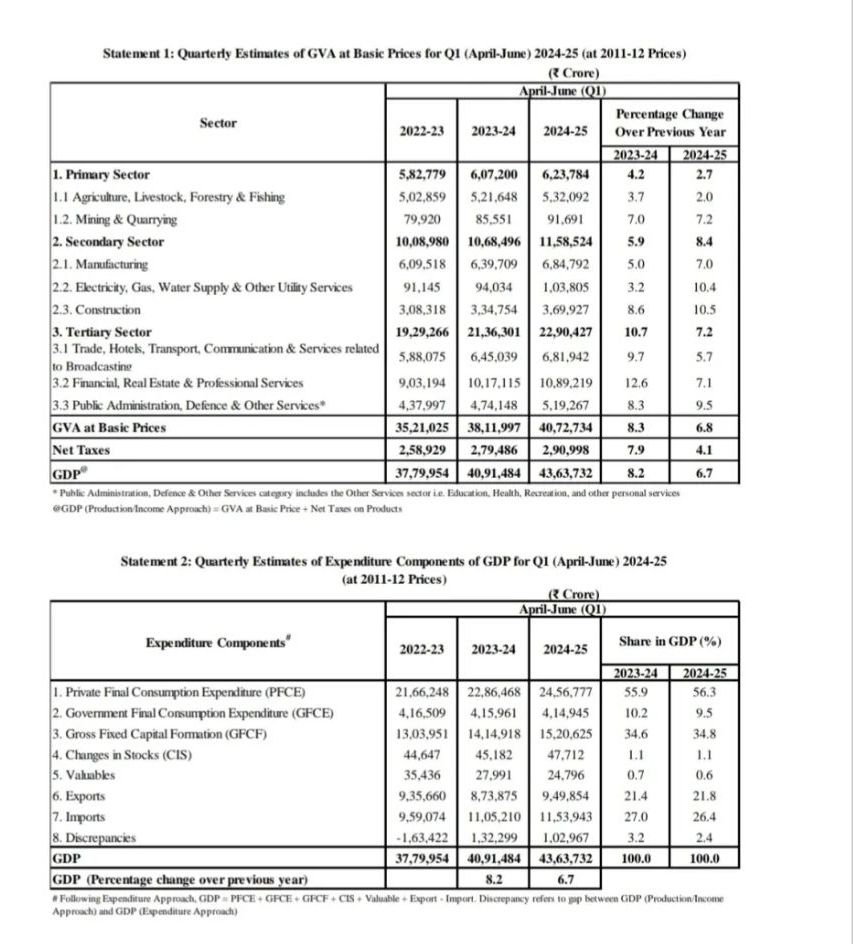
Tertiary Sector (Services): Services continued to dominate, contributing 52.5% to GDP. The sector’s robust performance, driven by finance, trade, and technology, is concentrated in urban areas, shaping economic opportunities and fueling urban growth. This sector employs only around 28 percent of the total workforce.
The services sector’s expansion has spurred job growth in cities, providing new opportunities for higher-wage employment, though this shift highlights regional differences in employment patterns between urban and rural areas
3. Self-Employment and Regional Dynamics
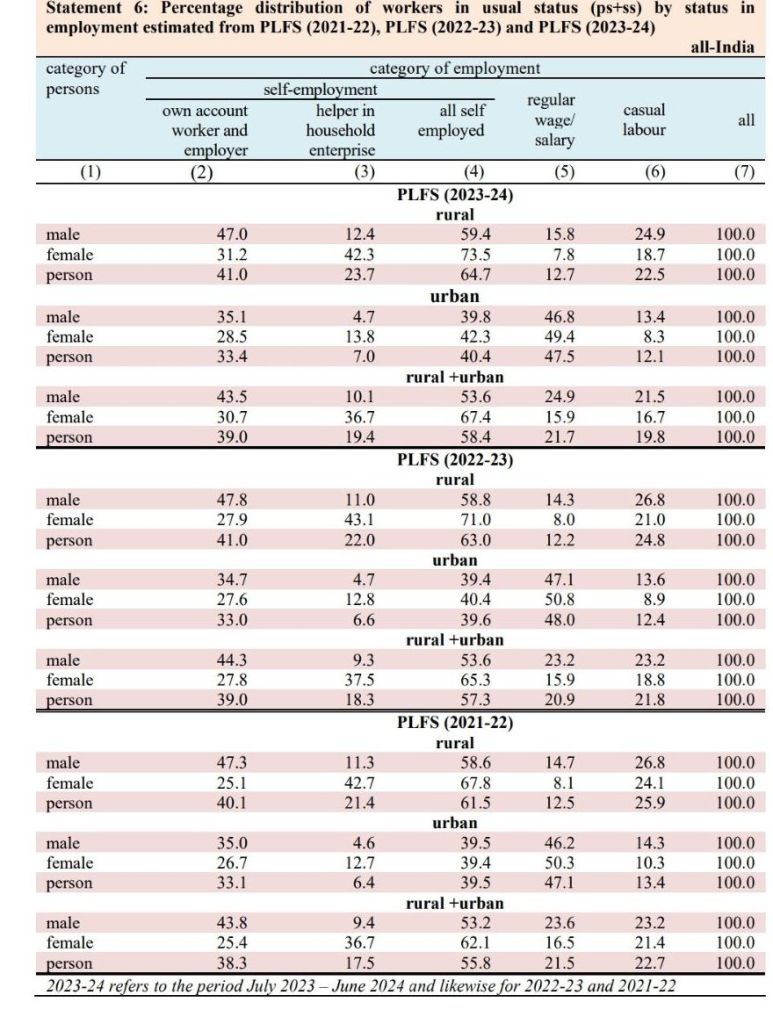
– Rural Self-Employment: In rural areas, 64.7% of the workforce is self-employed, primarily in agriculture. Small and informal enterprises remain a significant source of livelihood, but their lower income potential contrasts with urban economic activity, creating different economic realities across regions.
Among self-employed rural males, 47% work as own-account workers (individuals who run their own farms or businesses without employing others), while 12.4% are helpers in household enterprises (unpaid family workers). For rural females, a staggering 73.5% are categorized as helpers in household enterprises, reflecting the gendered nature of work in rural India, where women are often involved in unpaid or informal labor, particularly in agriculture and allied sectors.
– Urban Self-Employment: Urban areas see 40.4% of the workforce self-employed in a more diverse range of sectors, such as trade and small-scale manufacturing, which offer higher income potential compared to rural settings.35.1% of urban males are engaged in own-account work, while only 4.7% are helpers in household enterprises. For urban females, self-employment is less common, with 42.3% working in household enterprises, indicating the continued role of informal labor in urban settings but to a lesser extent than in rural areas.
4. Formal Employment and Labor Trends
– Urban Formal Employment: Formal wage employment is more prevalent in urban areas (46.8%), providing greater income stability and opportunities for professional growth, particularly in the service and manufacturing sectors.
– Casual Labor: Casual labor remains common in rural areas (22.5%), where job insecurity and lower wages create economic challenges compared to formal employment. This reflects broader differences in employment quality across rural and urban areas.
5. Unemployment and Workforce Participation
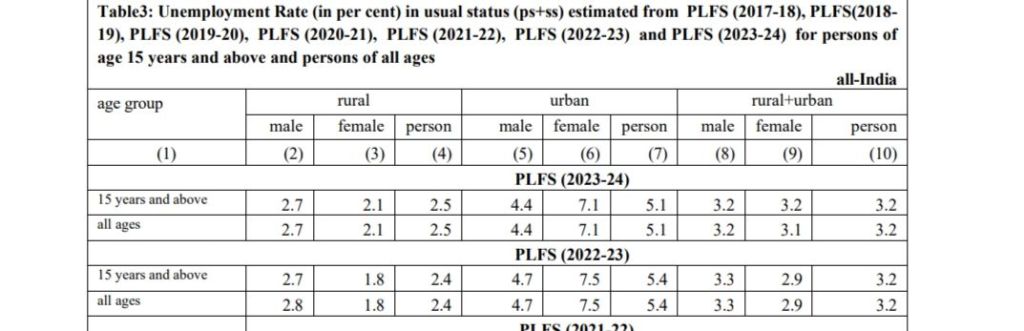
– Urban Unemployment: The urban unemployment rate (5.1%) exceeds that of rural areas (2.5%), reflecting the pressures of urban job markets. However, rural regions face more structural challenges, with lower productivity and fewer formal employment opportunities.
– Gender Dynamics: Gender disparities remain evident, with urban women facing higher unemployment (7.1%) and rural women often engaged in unpaid family work, highlighting the need for inclusive economic policies to increase female participation in formal sectors.
Conclusion: Sectoral Growth and Economic Balance
India’s economic performance in 2024 showcases robust growth in manufacturing and services but also highlights sectoral and regional disparities in employment and productivity. To foster balanced growth:
– Increasing rural productivity and diversifying employment opportunities are key priorities.
– Expanding formal employment opportunities, particularly in rural areas, can reduce economic divides.
– Addressing workforce participation for women and informal sector workers can drive more inclusive economic outcomes.
By addressing these disparities, India can ensure that growth benefits are more evenly distributed across regions and sectors, fostering a more balanced and sustainable economic future.
 Indian Political Debate