History was created in the Indian parliament on September 21st, 2023 with the passage of the Women’s Reservation Bill, 2023, officially known as “Nari Shakti Vandan Adhiniyam” unanimously in the upper house of the parliament and almost unanimously in the lower house (454-2) of the parliament. This is a precedence specially the way the last nine years of the parliament has been running with constant tussles between the government and the opposition on each issue leading to lower number of debates and discussions in the parliament.
The Women’s Reservation Bill has faced multiple introductions in Parliament but has not been enacted into law. It has been impeded by political debates and delays.
In 1996, the first version of the Women’s Reservation Bill was presented to the Lok Sabha as the 81st Constitutional Amendment Bill in September. After the House rejected it, the Bill was referred to a Joint Parliamentary Committee led by Geeta Mukherjee, and the committee’s report was submitted to the Lok Sabha in December 1996. However, due to the dissolution of the Lok Sabha, the bill became invalid.
In 1998, the bill was reintroduced in the 12th Lok Sabha but lapsed due to insufficient support. Subsequent reintroductions in 1999, 2002, and 2003 also failed to secure a majority of votes despite backing from major political parties.
In 2008, the bill was introduced in the Rajya Sabha and received approval with 186 votes in favor and one against. Nonetheless, it was never brought up for discussion in the Lok Sabha and became ineffective when the 15th Lok Sabha dissolved.
The Parliament’s inability to pass this bill can be attributed to various factors, primarily rooted in societal attitudes that do not acknowledge women as leaders and the belief that women are hesitant to compete alongside male candidates.
If all these bills are compared, the major point of similarity which has remained a point of contention has been the OBC women reservation within the women’s reservation, i.e. reservation within a reservation. This remains a contention in the present bill as well.
The overall proportion of OBC in total population in India has been on the rise (NSSO data, 2011-12) and hence there has been a significant increase in demand for caste base census. But still now there is no overall OBC reservation in the constitution and hence this issue remains an open area.
One of the important aspects of the present bill is the issue regarding implementation of the same with delimitation and census as two preconditions before implementing the women’s reservation bill. Now what is delimitation and how it is linked to Indian constitution and does both delimitation and census necessary for any reservation to be implemented. Let us first understand what delimitation and the history of it is.
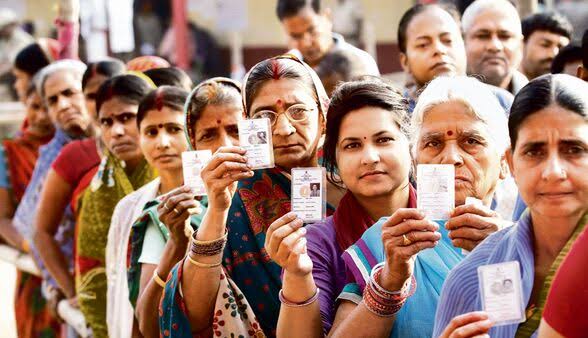
The Election Commission defines delimitation as the process of establishing the boundaries of constituencies for elected bodies, which is based on the population data obtained from the most recent Census. In Independent India’s history, delimitation has taken place four times – 1952, 1963, 1973 and 2002. A look at how they changed the political landscape. According to Article 82 of the Constitution, after each Census is conducted, the distribution of Lok Sabha seats among states must be adjusted to account for changes in population. Simultaneously, Article 81 specifies that the Lok Sabha can have a maximum of 550 members, with 530 representing states and 20 representing Union Territories. It also emphasizes that “the ratio between (the number of seats) and the population of the state is, so far as practicable, the same for all states.” Consequently, the aim is to ideally ensure that each constituency across the country has a similar population size.
According to these provisions, an independent Delimitation Commission is established every decade to redistribute seats among states. This Commission is appointed by the President of India and consists of a retired judge from the Supreme Court or a high court, the Chief Election Commissioner, and the State Election Commissioner.
The Commission, in collaboration with State Election Commissions, reviews population changes to redraw existing constituencies or create new ones. It then publishes a draft report in the Gazette of India, which is open to public input. After considering this feedback, the Commission issues its final report. Once published, the Commission’s decisions are conclusive and, in accordance with the Delimitation Commission Act of 1952 and Article 329A of the Constitution, carry the “full force of law and are not subject to challenge in any court.”
Delimitation also influences the allocation of seats reserved for Scheduled Castes (SCs) and Scheduled Tribes (STs), with these reservations determined on a state-specific basis according to the proportion of SC and ST populations in each state. The most recent update of these reservations occurred in 2008.
Before 2021, the Census was regularly conducted every ten years since 1951. However, a Delimitation Commission was established on only four occasions – in 1952, 1963, 1973, and 2002.
In 1952, during the delimitation process, the maximum number of Lok Sabha seats was set at 500 after the Commission conducted three public meetings to collect feedback. However, in the 1952 Lok Sabha elections, only 489 seats were contested, and in 1957, 494 seats were up for election.
In 1963, the Delimitation Commission made its first set of changes to the composition of the Lok Sabha. It observed that the average population per constituency had increased from 7.3 lakh to 8.9 lakh. As a result, the final order increased the total number of Lok Sabha seats to 522. Despite this increase, Uttar Pradesh lost one seat, while Andhra Pradesh and the former Madras (now part of Tamil Nadu) lost two seats each. Several states, including Assam, Gujarat, Karnataka, Kerala, Madhya Pradesh, Punjab, Rajasthan, and West Bengal, saw an increase in their allocated seats.
In 1973, the Commission’s order raised the maximum number of Lok Sabha members to 545, taking into consideration population growth and the creation of new states.
Since then, this member count has remained unchanged. Out of the 545 members, 543 were directly elected, and two were nominated positions for the Anglo-Indian community. However, this provision was removed by a Constitutional Amendment in 2019, so the current strength of the Lok Sabha is 543 members.
In 1976, the 42nd Amendment to the Constitution froze the number of Lok Sabha seats and postponed delimitation for 25 years until the 2001 Census, as outlined in Article 82. The Congress government led by Indira Gandhi, during the Emergency period, justified this suspension by citing “family planning policies” as the reason. They wanted to avoid penalizing states with effective population control measures because their representation in the Lok Sabha would decrease compared to states with larger populations.
The intention behind this decision was to provide states with the opportunity to reduce their fertility rates and achieve greater parity in representation across the country.
In 2002, delimitation was delayed for another 25 years, with the 84th Amendment under the Atal Bihari Vajpayee-led BJP government. Though constituency boundaries were redrawn to account for changes in population according to the 2001 Census, the total number of Lok Sabha seats and the number of seats allotted to each state remained unchanged. The Amendment froze the allocation of seats in Article 82 until “the relevant figures for the first Census taken after the year 2026 have been published”. There have been studies saying that based on projected population distribution if delimitation happens then the states which were able to control population will loose some seats and states which had seen a surge in population will see a surge in seats. Hence the states practicing population control will be penalized.
We had raised a question above that do both delimitation and census necessary for any reservation to be implemented. According to the constitution of India, no new reservation of seats can be implemented without delimitation. The same has been true for SC,ST reservation. One point to note here is that in 2008 while the total number of seats remained unchanged in the parliament, the seats allotted to SCs and STs increased as their proportion increased in the population in 2001 census as compared to 1971 census which has been the basis under which the last delimitation of seats was done.
Now with the delimitation clause and article 82 of the constitution attached to the new bill, the timeline of the implementation becomes a bit fuzzy. As per as article 82, the first census after 2026 should be considered to decide on the seat increase and adjustment across states. Now as per schedule the first census after 2026 is in 2031 and hence the first general election with women’s reservation can only be on 2034 (assuming delimitation process is completed in 3 years).
As we had discussed this is not the first attempt of women’s reservation bill. So let us see what has been in the history. There have been instances to learn here from the NDA 1 government. When the Vajpayee government came with the bills in 1999, the then delimitation deadline was due in 2 years, i.e. in 2001. The census was due in 2001. But they did not bring it as a pre-condition to the bill. What this could have given this time was the option to the government to consider the 1971 census ( as is considered now ) and delimitation of seats can be done based on that census as has been done now in terms of total number of seats and the change in distribution of women in the total population can be looked upon based upon the latest census (2011) as was the case for the SC, ST reservation.
This could have been one option of considering the quick implementation of the historic bill if not in 2024 but may be in the nearest state elections after 2024 or at best at any state elections after 2026 and finally in 2029 general elections.
The present historic bill will bring in women’s reservation and it is a huge step for the biggest democracy of India albeit in 2034. The seamless and quick implementation of this bill will be a huge strength to the democracy of our country.
A full fledged delimitation process can lead to more seats for North Indian states in the expense of South Indian states where population control measures have been followed in the true sense of term. First of all it penalises the southern states for taking the right measures. But more importantly it has both economic and political implications and can lead to a wider range of debate, this delaying the process of delimitation. Now that the present government has linked delimitation with women’s reservation, this can further delay the implementation.
What are the economic and political implications of delimitation which can lead to further debate. The southern states have significantly contributed to the net tax of India. As per the Ministry of finance data on the central budget, the southern states of Tamil Nadu and Karnataka were the third and fourth largest contributor to tax after Maharashtra and Delhi. All the five southern states have been the net contributors to the Indian economy in terms of taxation with contributing more and getting less of the proceeds. With delimitation the southern states will loose the number of seats in the parliament and hence will loose political power as well.
So this itself can be a huge point of contention. There can be huge backlash from those states. We have seen chief ministers of southern statets irrespective of party lines coming together for this issue.
Moreover it is also argued that BJP’s strength in the southern states is not that strong compared to the northern states. In the 2019 elections, they got 0 seats in Tamil Nadu, Kerala and Andhra Pradesh. Recently they also lost the only southern state (Karnataka) where they were in power. So south India is not the stronghold for the BJP. On the other hand they have almost a 100 percent strike rate in northern states ( UP, MP, Rajasthan and so on). So a delimitation with more number of seats to northern states and less to southern states benefits BJP at least if the political scenario remains the same as of today. This makes delimitation more controversial.
Given these debates around delimitation it remains to be seen if the process gets delayed further or not therby delaying the implementation of the historic women’s reservation bill into an uncertain period.
IPD sincerely hopes that the way the bill was unanimously passed in both the houses of the parliament, both government and opposition can come together and iron out the differences and ensure a fast implementation of this historic bill.
 Indian Political Debate